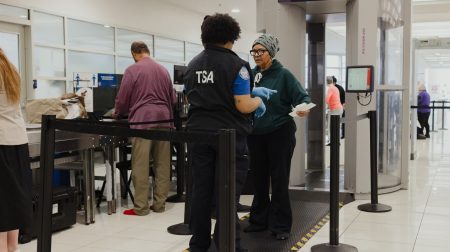
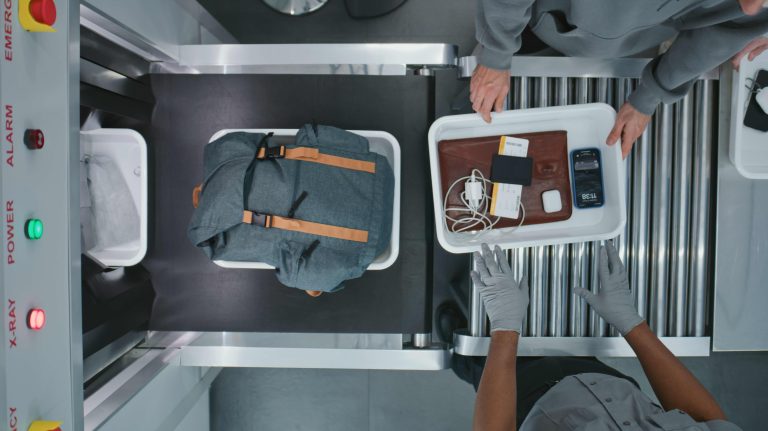
On March 21, 2026, CNN reported that 20 US airports without TSA screening were not experiencing the long passenger lines observed at some TSA-operated airports. Since then, preliminary Bureau of Transportation Statistics data has provided an opportunity to compare security delays at US airports during and after the March 2026 TSA shutdown. Dr Michael Turtz of Florida Atlantic University takes a closer look at the findings
The 20 airports participating in the Screening Partnership Program (SPP) may have been less directly exposed to TSA screening-staffing shortages during March 2026 because passenger screening was conducted by private contractors under TSA oversight. Although the program predated 2012, the FAA Modernization and Reform Act of 2012 lowered participation barriers by establishing clearer approval standards and limiting TSA’s discretion to reject applications. Since then, the SPP has expanded by 10 airports, doubling participation to 20 airports as of 2026 (Turtz, 2024; Turtz & Ramos, 2026).
The Bureau of Transportation Statistics (BTS) provides security-delay data for March 2026. BTS defines security delays as delays or cancellations associated with terminal or concourse evacuations, security breaches requiring aircraft re-boarding, inoperative screening equipment, or screening lines exceeding 29 minutes. This measure captures several potential causes of security delays, not only TSA staffing shortages.
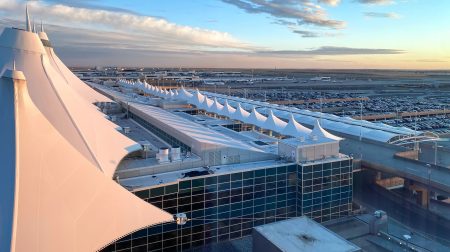
To provide preliminary comparisons between SPP- and TSA-operated airports, I selected airports with similar 2025 passenger volumes. San Francisco International Airport (SFO) is the largest airport in the SPP and handled 54,532,613 total passengers in 2025. The closest TSA airport in size was Miami International Airport (MIA), which served 55,314,661 total passengers in 2025. Both airports rank among the 10 busiest US airports by total commercial aircraft enplanements. In March 2026, SFO was delayed 206 minutes due to security delays, while MIA was delayed 883 minutes due to security delays. By May 2026, when TSA operations had reportedly returned to normal, security delays accounted for 226 minutes at SFO and 258 minutes at MIA.
The next-largest SPP airport was Kansas City International Airport (MCI), which ranked 40th among US airports by total commercial aircraft enplanements. However, I excluded MCI from the comparison because a March 8, 2026, evacuation following a non-credible bomb threat lasted more than two hours and would likely confound the security-delay data. Smaller SPP airports such as Orlando Sanford International Airport (SFB), which handled 3.17 million total passengers in 2025, were compared with Albany International Airport (ALB), which handled 3.19 million total passengers in 2025. In March 2026, SFB was delayed 16 minutes due to security delays, and ALB was delayed 221 minutes due to security delays. However, in May 2026, SFB was delayed six minutes due to security delays, and ALB was delayed 12 minutes due to security delays.
Although the data is limited and a full regression analysis should account for passenger and flight volume, checkpoint lanes, staffing levels, weather and airport fixed effects, the preliminary comparisons indicate substantial differences in reported security-delay minutes during March 2026. MIA recorded more than four times the security-delay minutes of SFO, while ALB recorded more than 13 times those of SFB. These differences are consistent with the possibility that TSA staffing disruptions contributed to longer screening delays at TSA-operated airports, although the current analysis does not establish causation.
| Measure | San Francisco International Airport (SPP) | Miami International Airport (TSA) |
| 2025 total passengers | 54,532,613 | 55,314,661 |
| Approximate US passenger ranking | 9th | 10th |
| March 2026 security delays | 206 minutes | 883 minutes |
| May 2026 security delays | 226 minutes | 258 minutes |
| Measure | Orlando Sanford International Airport (SPP) | Albany International Airport (TSA) |
| 2025 total passengers | 3.17 million | 3.19 million |
| March 2026 security delays | 16 minutes | 221 minutes |
| May 2026 security delays | 6 minutes | 12 minutes |
Dr Michael Turtz is a recent graduate of the PhD program in public administration at the School of Public Administration, Florida Atlantic University. His research focuses on transportation security, public administration and public policy. He is the author of two publications in Springer Nature’s Journal of Transportation Security, examining the Transportation Security Administration’s (TSA) Screening Partnership Program (SPP).