

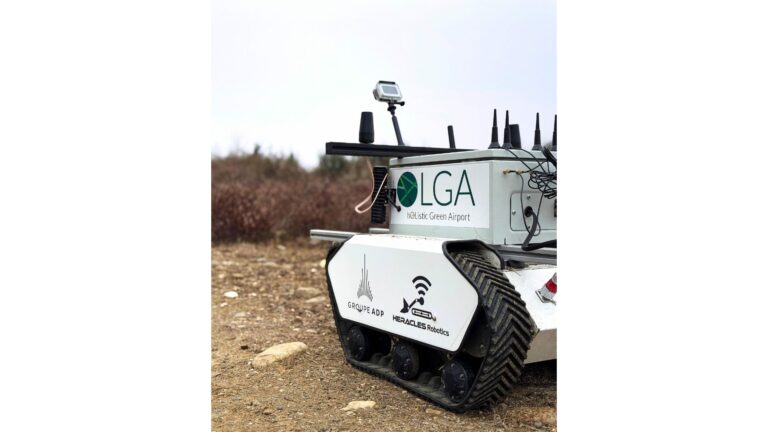
An AI-powered robot designed to monitor biodiversity has been tested at Milan Malpensa Airport as part of a European project focused on improving environmental sustainability at airports.
The autonomous robot was developed under the OLGA (hOListic & Green Airports) project and has previously been tested at Paris-Charles de Gaulle Airport. The latest trial took place in green areas within the airport grounds as well as in the nearby Ticino Park.
Equipped with sensors, digital imaging systems and artificial intelligence algorithms, the robot can identify plant species, map vegetation distribution and collect real-time data on habitat conditions. The system is also designed to detect the presence of invasive plant species and support biodiversity monitoring programs.
The trial involved SEA Milan Airports, Groupe ADP and researchers from Université Paris XII Val de Marne, working in collaboration with the Ticino Park Authority.
According to the project partners, the initiative is intended to evaluate how robotics and automated data collection could support the management and protection of natural environments surrounding airport infrastructure.
Malpensa Airport is located adjacent to protected natural areas that include heathland habitats, which are considered among the most fragile ecosystems in the region.
The OLGA project is funded through the European Union’s Horizon 2020 research and innovation program and brings together airports, research organizations and industry partners to develop new technologies focused on energy use, mobility and environmental management in aviation.
Related news, Assaia launches stand and gate optimization solution as airports face growing capacity pressure