
SITA’s latest Air Transport IT Insights report has found that despite record technology investment across the aviation sector, limited data sharing between systems and partners continues to restrict outcomes.
The report shows the industry invested US$50.8bn in IT in 2025, with airlines spending US$36bn (3.6% of revenue) and airports US$14.8bn (7.3% of revenue). However, SITA said a lack of coordinated data flow is preventing that investment from delivering full value.
“We are publishing this research at a moment when the industry is under significant pressure,” said David Lavorel, CEO of SITA. “Across every area we measured, the same constraint emerges: where data does not flow freely across systems and partners, investment cannot fully deliver what it was designed to unlock.”
The findings indicate that data-driven decision-making is now a strategic priority for 83% of airlines and 89% of airports. At the same time, nearly half of airlines (49%) identified data integration and consistency as the main barrier to achieving this.
Operational reliability is a key focus, with flight delays estimated to account for US$30bn in lost revenue, according to the International Air Transport Association (IATA). Around 46% of airlines are upgrading flight operations systems to improve real-time data access across crew, aircraft and passenger systems, although fragmented data continues to limit early intervention.
The report also highlights growing adoption of artificial intelligence, with 63% of airlines using AI in operations control for disruption management and resource allocation. However, only 17% are using AI for real-time turnaround monitoring, reflecting challenges in coordinating data across multiple stakeholders.
“Aviation is deploying AI with real ambition. But the survey is clear: the primary barrier to maximizing that investment is the lack of data integration across the operation,” Lavorel said.
Cybersecurity has become a priority as systems become more interconnected, with 71% of airports ranking it as their top IT focus area. The use of AI in cybersecurity has also increased, with 64% of airports applying it to detect threats and reduce response times.
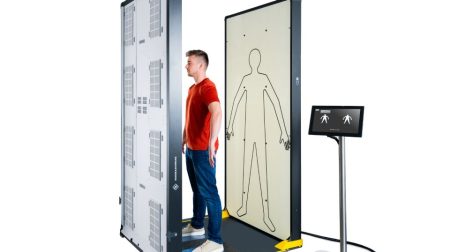
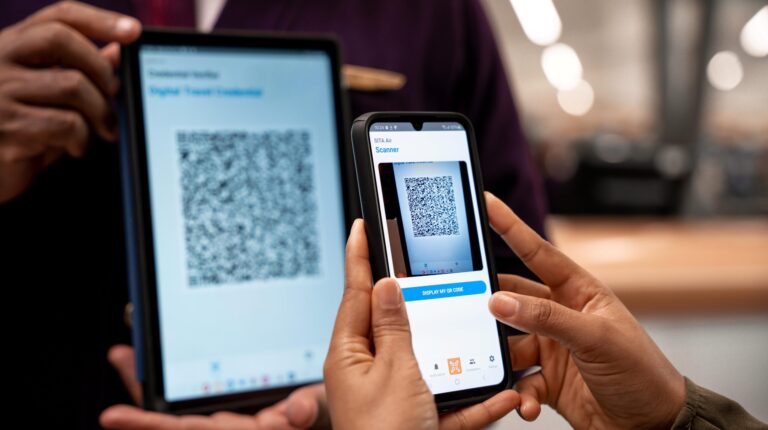
Digital identity adoption is accelerating, with 64% of airlines planning to issue their own credentials, and biometric border control expected to reach 83% of airports by 2028. However, 57% of airlines cited airport cooperation as the main requirement for scaling these systems.
Sustainability initiatives show a similar pattern. While fleet renewal and energy monitoring have been widely adopted, capabilities requiring shared data – such as full emissions tracking – remain limited.
“Across AI, cybersecurity, digital identities and sustainability, operators name the same constraint: data that does not flow freely across systems and partners,” Lavorel said. “Data coordination is not a future priority. It is what is limiting outcomes today.”
In related news, SITA integrates Google’s Find Hub location sharing into WorldTracer to speed up delayed baggage recovery