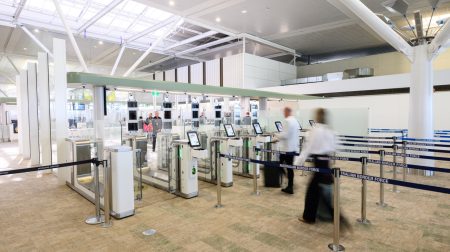

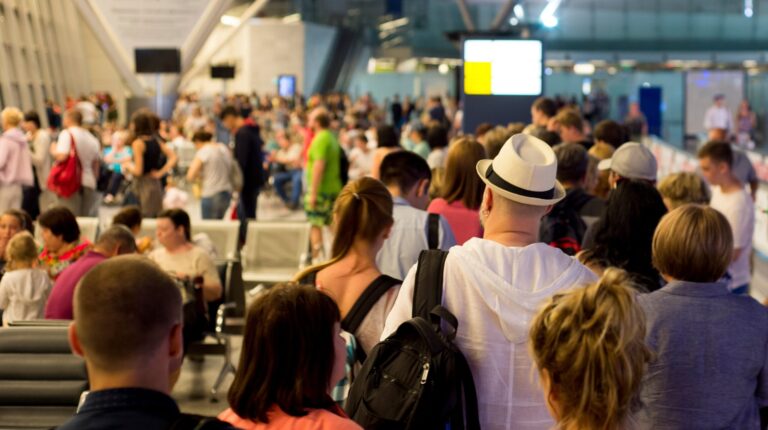
Airports and airline groups in Europe have warned that the rollout of the Schengen Entry/Exit System (EES) is causing significant delays for passengers and could lead to major disruption during the peak summer travel season.
In a joint letter to the EU Commissioner for Internal Affairs and Migration, Magnus Brunner, ACI Europe, Airlines for Europe (A4E) and the International Air Transport Association (IATA) said current implementation issues risk causing excessively long waiting times for passengers if no action is taken.
The organizations said passengers are already experiencing waiting times of up to two hours at airport border control under the current stage of the EES progressive rollout, which requires 35% of all third-country nationals entering the Schengen zone to be registered.
They identified three main issues contributing to delays: chronic understaffing at border control, unresolved technology problems – particularly around automated border systems – and limited uptake by Schengen states of the Frontex pre-registration app.
According to the letter, mandatory EES registration at all border crossings during July and August could result in significantly longer waits unless these issues are addressed. The groups warned that this could lead to queues of four hours or more during the busiest months, when passenger traffic typically doubles at European airports.
Airports and airlines are urging the European Commission to confirm that Schengen member states will retain the ability to partially or fully suspend EES until the end of October 2026. Under the progressive rollout set out in Regulation 2025/1534, suspension mechanisms would no longer be available beyond early July. The groups said it remains unclear whether such flexibility can still be applied under existing Schengen Border Control Code provisions.
Olivier Jankovec, director general of ACI Europe; Ourania Georgoutsakou, managing director of A4E; and Thomas Reynaert, IATA’s senior vice president for external affairs, said in a joint statement, “There is a complete disconnect between the perception of the EU institutions that EES is working well, and the reality, which is that non-EU travelers are experiencing massive delays and inconvenience. This must come to an end immediately.
“We need to be realistic about what will happen during the peak summer months, when traffic at Europe’s airports doubles. The rollout of EES must be flexible to react to operational realities. This is an absolute prerequisite for its success – and for safeguarding the reputation of the EU as an efficient, welcoming and desirable destination.”
In related news, ACI World releases global airport traffic forecasts as long-term demand growth continues