
Western Sydney International Airport (WSI) has released its inaugural Sustainability Strategy, which details how sustainability has been embedded in its design to reduce carbon footprint and the path to becoming net zero.
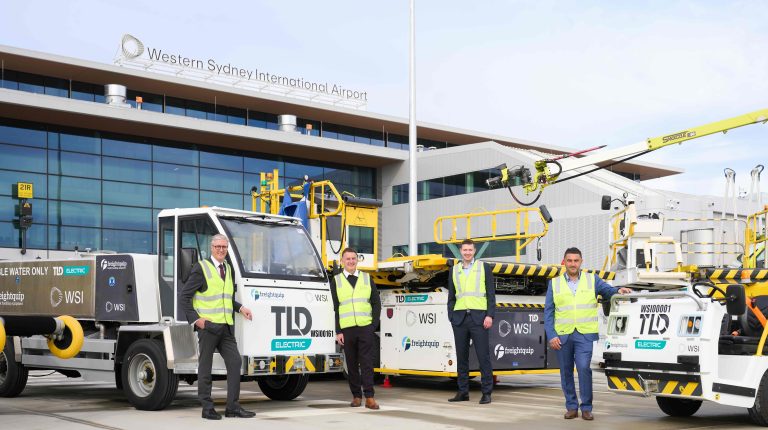
Set to become Australia’s first greenfield international airport in over 50 years, the new 24-hour gateway has secured two key partnerships to help achieve this goal. CleanPeak Energy will support the delivery of 100% renewable electricity for the airport precinct; and Freightquip will supply and operate an almost entirely electrified GSE fleet covering the full scope of airport operations.
WSI CEO Simon Hickey said, “We are delighted to be working with Australian-owned business CleanPeak to support WSI’s net zero ambitions. The energy system they will manage represents a landmark commitment to achieving net zero scope 1 and 2 carbon emissions for WSI, showcasing the low-carbon future airports can champion as pivotal pieces of major infrastructure.”
Federal Minister for infrastructure, transport, regional development and local government Catherine King confirmed that facilities would be in place so jets can be refueled with “locally produced biofuels”.
The energy system with CleanPeak Energy is set to incorporate:
- Management and operation of WSI’s existing rooftop solar (which has capacity to produce 4.5MW of electricity, capable of powering around 40% of the terminal).
- Installation and management of an additional 9MW rooftop solar energy system that will gradually be built at WSI’s Cargo Precinct.
- Installation and management of a 120MWh battery energy storage system – planned for delivery in late 2027 – to provide stability, resilience and support peak energy demand.
- Management of the renewable electricity WSI purchases from the grid.
- Management of the embedded network enabling the “efficient distribution and optimization” of energy across WSI for airport operations and various precinct tenants.
CleanPeak Energy CEO Philip Graham said, “CleanPeak is enabling the airport to run on 100% renewable electricity by investing at the site to optimize local energy infrastructure as well as developing additional solar farms to deliver the scale of electricity required to ensure the airport runs 24/7 with renewable electricity.”
Hickey added that when passenger services commence, WSI will become the first major Australian airport to operate an airport-wide GSE pooling program thanks to its collaboration with Freightquip. He said this will incorporate the highest proportion of electric GSE of any major Australian airport.
The partnership with Freightquip will deliver:
- The full scope of GSE equipment for aircraft turnaround operations, including belt loaders, cargo loaders, baggage tractors and pushback equipment with a shared fleet model for all ground handlers, improving coordination, utilization and sustainability outcomes;
- An integrated single digital platform that provides real-time visibility, automated allocation and connection with WSI’s flight information system; and
- Dedicated on-site maintenance through Freightquip’s specialist team.
Freightquip COO and head of aviation operations Andrew Steel said that WSI “presents a real opportunity to help set a new standard for how airports approach ground operations.”
“We see WSI as the beginning of a much bigger shift in how the industry approaches ground operations globally,” he added.
Related news, iGA Istanbul Airport runs on 100% solar power