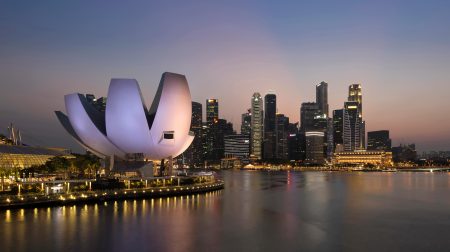

PT World recently caught up with Caspar Baum, global head of aviation, and Thomas Warren, global operations director, aviation, both at SJ Group, ahead of their keynote presentation at the inaugural PTE Asia event in Singapore (September 23-24, 2026), titled The future airport ecosystem: connecting people, places and possibilities
Please introduce yourselves – what are your current roles, and how does SJ Group support airports?
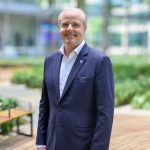 Caspar: I am the global sector lead for aviation at SJ Group, based in Singapore. My career has spanned airport operations, development, advisory and investment across Europe, the Middle East and Asia-Pacific. Having worked as an architect, urban planner and airport operator, I have been involved in everything from airport masterplanning and terminal development to operational readiness, commissioning and performance optimization. I have also helped airports prepare for major international events, including the Olympic Games, where airport capacity, passenger flows, operational readiness and stakeholder coordination are critical to success. Prior to joining SJ Group, I held senior leadership positions at Athens International Airport and led aviation consulting teams supporting major airport programs, including Changi Airport Terminal 3, Suvarnabhumi Airport and Dubai International Airport.
 Thomas: I am the global operations director at SJ Group and have more than two decades of experience in aviation operations, airport development and stakeholder engagement. My background includes airfield assessments and airport operations worldwide, supporting airport recovery following natural disasters, and advising clients on public-private partnerships that enable airports to attract investment and expand infrastructure. I have also worked extensively with governments, regulators and industry bodies across Asia-Pacific to improve aviation accessibility and connectivity.
Caspar: At SJ Group, we support airport owners, operators and developers across the full lifecycle of airport development, from strategy and masterplanning through design, engineering, program management, construction delivery and operational transformation.
One of the things that differentiates SJ Group is that many of our aviation professionals have first-hand experience working within airport operators, owners and developers. We understand the operational, commercial and strategic challenges airports face because we have managed and transformed airport environments ourselves.
We also combine advisory, planning, design, engineering and delivery expertise within a single organization. This allows us to help clients move seamlessly from vision and strategy to implementation.
Thomas: As a Temasek-owned organization, we bring a strong focus on stewardship, accountability and long-term value creation. We see our role not as delivering individual projects, but as building trusted partnerships that help airports navigate growth, sustainability objectives and changing passenger expectations over the long term.
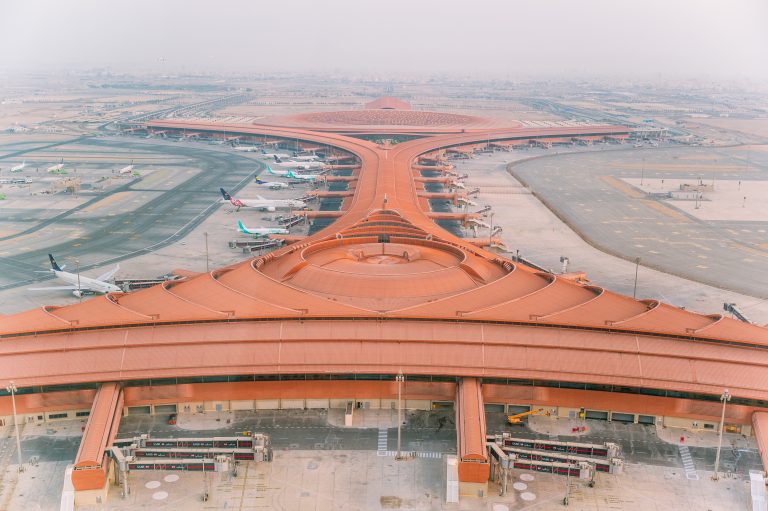
Today, SJ Group is supporting some of the aviation industry’s most significant programs, including the development of Changi Airport Terminal 5, where we are providing engineering services across multiple packages, and King Abdulaziz International Airport, where we are serving as project management consultant overseeing more than 150 capital projects.
Tell us more about your presentation at PTE Asia.
Thomas: Our presentation explores how the future airport ecosystem will be shaped by a more integrated approach to planning, operations and infrastructure. As airports across Asia-Pacific face rising passenger demand, the traditional response has often been to expand capacity through new construction. While expansion will remain important in many cases, we believe there is a significant opportunity to unlock greater value from existing assets through smarter planning, digital integration, AI-enabled operations and sustainable design.
Drawing on SJ Group’s experience across airport advisory, masterplanning and engineering, we will share practical examples of how airports can increase capacity, improve resilience, reduce carbon impacts and elevate the passenger experience. At the heart of the discussion is a fundamental shift in thinking: airports should be viewed as connected ecosystems rather than a collection of standalone projects or disciplines. We will explore what this means in practice and why a ‘build more with less’ approach could become a defining strategy for airports seeking to balance growth, sustainability and resilience in the decade ahead.
Can you share a specific example of how you have helped futureproof an airport?
Caspar: One of the strongest examples is our work on Changi Airport Terminal 5, where SJ Group is serving in dual lead engineering roles (master building consultant and master civil consultant), covering the terminal buildings and the surrounding airside and landside infrastructure.
What makes Terminal 5 particularly interesting is that it has been designed to be adaptable to future needs. The terminal incorporates a modular and flexible design that allows parts of the facility to operate independently when needed, enabling capacity to be scaled in line with demand while maintaining operational resilience.
Futureproofing is also embedded through sustainability and technology. The development is targeting Green Mark Platinum Super Low Energy certification and incorporates features such as district cooling, thermal energy storage, smart building management systems and one of Singapore’s largest rooftop solar installations. The infrastructure is also being designed to support emerging aviation requirements, including sustainable aviation fuel and more energy-efficient aircraft operations.
Equally important is connectivity. Terminal 5 is being developed as part of a wider transportation ecosystem, integrating train, bus, taxi and other mobility modes to support future growth and provide passengers with more seamless journeys.
Thomas: Another example is our work with Jeddah Airports Company, led by our colleague Onur Yamuk, executive director of aviation hubs, where we are providing project management consultancy services for a program of more than 150 capital projects aimed at increasing King Abdulaziz International Airport’s capacity from approximately 30 million to 114 million passengers annually by 2030.
What makes this program a futureproofing exercise rather than simply an expansion project is its phased and integrated approach. Rather than relying on a single large-scale development, the airport is sequencing and managing a coordinated portfolio of infrastructure investments. This enables capacity growth while maintaining operational continuity and minimizing disruptions.
A further aspect of futureproofing is capability development. Alongside the infrastructure program, SJ Group is supporting knowledge transfer and talent development initiatives to help strengthen local expertise and ensure the organization has the skills and institutional capabilities needed to manage future growth.
Ultimately, futureproofing an airport is not just about building more infrastructure. It is about creating flexible, resilient and sustainable systems that can adapt to changing passenger demand, evolving technologies and future operational requirements.
What one technology has had the greatest impact on airport ‘system intelligence’ – and where do you see the greatest potential for the future?
Caspar: If I had to identify one technology that has had the greatest impact on airport system intelligence, it would be the digital twin.
Digital twins bring together data from across airport operations, providing a real-time view of how terminals, airside operations, passenger flows, utilities and transportation systems are performing as one connected ecosystem. At SJ Group, we are working with digital twin technologies across major airport projects, including Changi Airport and Jeddah Airport.
Looking ahead, we both believe the greatest potential lies in AI-driven predictive operations built on top of that digital twin foundation. Rather than simply monitoring what is happening, airports will increasingly be able to anticipate and respond to issues before they occur, from security queue surges and aircraft stand conflicts to energy demand and turnaround delays.
The biggest opportunity is to move from reactive to predictive operations, helping airports improve capacity, resilience and passenger experience through smarter, data-driven decision-making.
Register now to attend the first-ever PTE Asia event in Singapore, September 23-24, 2026.