

PTT sits down with Eriola Tola, asset management and environment director at Tirana International Airport, to discover more about the expert insights she plans to share in the panel discussion – titled ‘Adding capacity while growing at record pace’ – at Passenger Terminal Conference 2026 (March 17, 18 & 19) in London, UK.
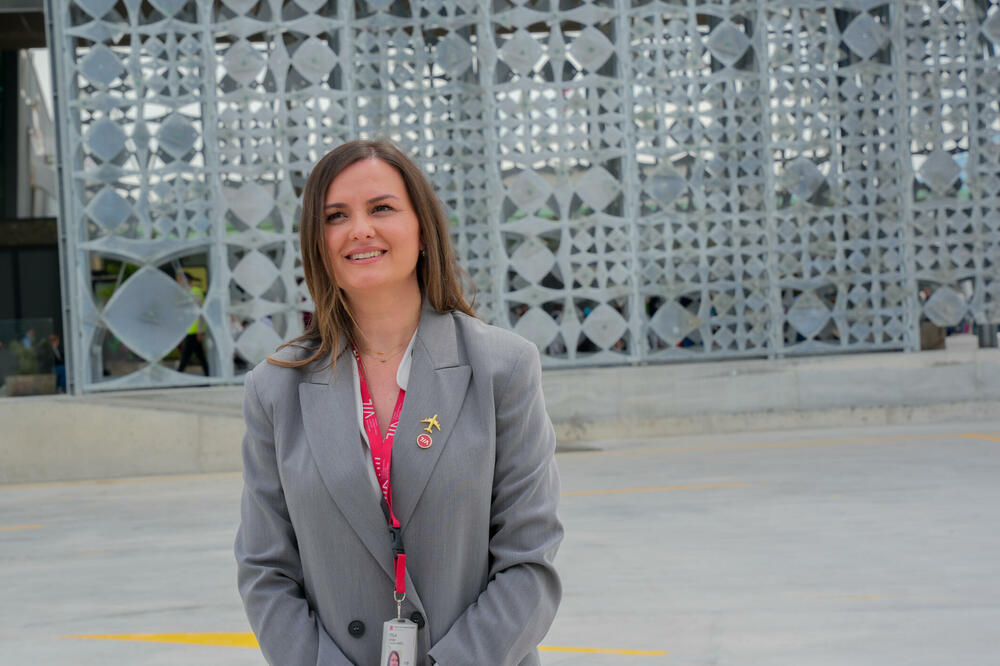
Describe your presentation?
This presentation explores how Tirana International Airport is managing unprecedented growth, starting from 3 million passengers in 2019 and closing last year with 11.6 million passengers, setting new records in passenger traffic and connectivity. To meet rising demand, the airport is enhancing operational capacity through targeted infrastructure projects, advanced planning processes and sustainable investment. The session examines how rapid expansion is being balanced with efficiency, safety and service quality, highlighting both the challenges and opportunities of scaling airport operations at record pace while ensuring long-term resilience and customer satisfaction.
Tirana International Airport has seen exceptional traffic growth. What have been the biggest operational challenges associated with scaling capacity so quickly?
Tirana International Airport has experienced extraordinary growth in a very compressed timeframe. The primary challenge was scaling capacity at speed without compromising safety or service quality.
We had to expand the infrastructure, optimize terminal flows, and increase apron and operational capacity while maintaining full daily operations. Delivering major investments in record time—such as new taxiways and aircraft stands, the extension of the runway and terminal building, a new terminal façade connecting all existing sections of the building, and a new underground parking facility—required disciplined execution and strong project management
At the same time, rapid growth meant scaling our workforce and ensuring that every new team member met the same high safety and service standards. Maintaining operational resilience during this transition was critical.
Close coordination with airlines, ground handlers, and authorities was equally essential to keep the entire airport ecosystem aligned.
Which infrastructure expansion projects have had the most immediate impact on performance and passenger flow?
The expansion of the Terminal has had the most immediate and visible impact on both operational performance and passenger flow. By significantly increasing processing areas, gate capacity, and circulation space, we were able to reduce congestion, improve comfort, and streamline peak-hour operations.
Equally important has been the integration of new technology. Advanced security screening systems, and improved baggage handling processes have enhanced efficiency while maintaining the highest safety standards.
The combination of expanded physical capacity and smart technology deployment has allowed us to accommodate rapid traffic growth while improving punctuality, processing times, and overall passenger experience.
How are advanced planning processes helping the airport anticipate demand and avoid bottlenecks as traffic continues to rise?
Advanced planning at our airport is very practical and operationally focused. We work closely with airlines to receive early visibility on capacity increases, new routes, and schedule changes. This allows us to adjust gate allocation, staffing levels, security lanes, and ground handling resources well in advance of traffic peaks.
We use detailed traffic forecasting and daily load analysis to identify peak hours and high-density periods. Based on this, we optimize passenger flow within the Terminal — adjusting queue management, opening additional processing points, and reallocating staff where needed.
Real-time monitoring also plays a key role. Our operations team tracks passenger volumes, turnaround times, and terminal occupancy throughout the day, enabling immediate action if pressure points start to form.
In addition, regular coordination meetings with all stakeholders ensure alignment across the airport ecosystem.
This hands-on, data-informed approach helps us anticipate demand early, respond quickly, and prevent bottlenecks while maintaining safety and service standards.
Sustainable investment is a key theme of your session. How are environmental considerations being integrated into capacity expansion projects?
Sustainability is a core pillar of our capacity expansion strategy and is reflected in practical, measurable actions. One of our key investments has been in renewable energy, including the installation of solar panels that already contribute significantly to our energy needs. We are also planning a major photovoltaic expansion in the near future, which will further increase our energy independence and reduce our carbon footprint.
At the same time, we have upgraded our infrastructure with energy-efficient LED lighting across terminals, aprons, and airside areas, delivering immediate reductions in electricity consumption and maintenance. In parallel, we are progressively transitioning our ground support equipment and operational fleet to electric vehicles, reducing both emissions and noise while improving operational efficiency.
These efforts have been recognized with the achievement of Level 3 Airport Carbon Accreditation, reflecting our structured approach to carbon management and our engagement with stakeholders across the airport ecosystem.
Environmental considerations are fully integrated into our development planning, ensuring that new facilities incorporate smart systems, energy-efficient design, and sustainable materials. This approach allows us to expand capacity responsibly while aligning with international sustainability standards and long-term climate objectives
What is the key message you would like delegates to take away from your presentation?
The key message I want delegates to take away is that delivering complex infrastructure projects within a fully operational airport environment requires strong planning, flexibility, and close coordination across all stakeholders. Successfully expanding capacity while maintaining safe, efficient, and uninterrupted operations is a major challenge, but also a significant opportunity to demonstrate operational excellence and innovation.
By combining real-time operational management, smart infrastructure planning, and strong stakeholder engagement, airports can deliver seamless passenger experiences while significantly reducing environmental impact. Sustainability should be viewed not as a constraint, but as a strategic opportunity to improve resilience, reduce costs, and create long-term value.
At the conference, I am particularly interested in connecting with airport operators, infrastructure developers, project managers, and engineering consultants who are facing similar challenges. Exchanging practical experiences, lessons learned, and best practices can help improve project delivery, reduce operational risks, and optimize timelines and costs. I also look forward to engaging with technology providers offering smart construction, operational planning, and digital monitoring solutions that can support safe and efficient airport transformation.
To hear more valuable industry insights from top aviation executives, book a conference pass for Passenger Terminal Conference, taking place on March 17, 18 & 19 in London, UK.