
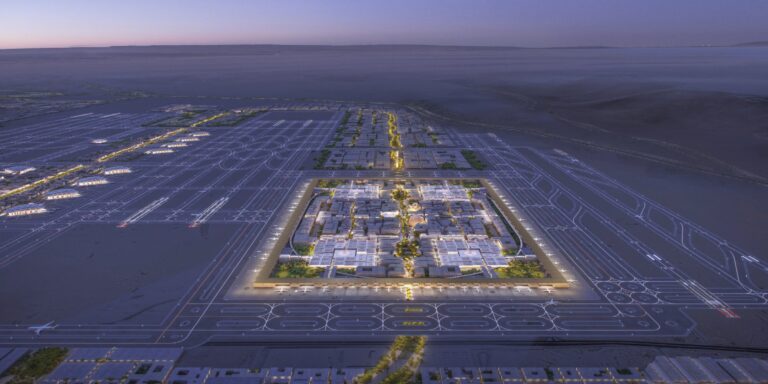
King Salman International Airport (KSIA) has begun construction of its third runway, marking a major milestone in the delivery of the airport’s masterplan and a key step in strengthening operational efficiency and long-term capacity.
The new runway is a central component of KSIA’s airfield development program and is intended to support sustained growth in air traffic demand. The project, delivered in collaboration with FCC Construcción SA and Al-Mabani General Contractors Company, has been aligned with Riyadh’s prevailing wind patterns to ensure safe and efficient aircraft operations in all conditions.
Once operational enhancements are completed and the third runway enters service, KSIA’s capacity is expected to increase from 65 to 85 aircraft movements per hour. The runway will be 4,200 meters long and include multiple access taxiways to support smooth aircraft flows and reduce congestion.
Acting CEO of KSIA, Marco Mejia, said, “Launching construction of the third runway marks a pivotal step in delivering the KSIA masterplan and reflects our commitment to developing world-class infrastructure capable of supporting future growth, enhancing operational efficiency and expanding long-haul connectivity without constraints.”
King Salman International Airport is one of Saudi Arabia’s flagship aviation projects and forms a core part of the Kingdom’s Vision 2030 strategy to position Riyadh as a global capital and leading international aviation hub. The project was announced by His Royal Highness Prince Mohammed bin Salman bin Abdulaziz Al Saud, Crown Prince and Prime Minister, highlighting its national and strategic importance.
Located on the site of the existing King Khalid International Airport, the development will integrate the current terminals with three new terminals, alongside residential, leisure and logistics facilities. When complete, the airport will feature six runways across a total area of 57 square kilometers.
KSIA is designed to accommodate up to 100 million passengers annually and handle more than two million tonnes of cargo by 2030. The third runway project will support the expansion of the airport’s international route network and reinforce Riyadh’s role as a globally connected aviation gateway.
In related news, Heathrow outlines £1.3bn investment program for 2026