

Close Menu
Passenger Terminal TodayPassenger Terminal Today
  • News
    • A-C
      • Accessibility
      • Baggage
      • Biometrics
      • Boarding
      • Check in
      • Construction & Architecture
      • Covid-19
      • CSR
    • D-L
      • Displays & Signage
      • Expo
      • Food & Beverage
      • Ground Support
      • IT & Software
      • Lighting
      • Lounge
    • M-R
      • Operations
      • Parking
      • Passenger Experience
      • Personnel
      • Regulation & Policy
      • Retail
    • S-Z
      • Seating
      • Security
      • Self-service
      • Sustainability
      • Technology
      • Terminal
      • Wayfinding
      • Webinars
  • Opinion
  • Features
  • Online Magazines
    • January 2026
    • Showcase 2026
    • September 2025
    • June 2025
    • April 2025
    • Showcase 2024
    • September 2023
    • June 2023
    • April 2023
    • January 2023
    • Archive Issues
    • Subscribe Free
  • Videos
  • Webinars
  • Supplier Spotlight
  • Events
LinkedIn Facebook X (Twitter)
  • Sign-up for Free Weekly E-Newsletter
  • Meet the Editors
  • Contact Us
  • Media Pack
LinkedIn Facebook
Subscribe
Passenger Terminal TodayPassenger Terminal Today
  • News
      • Accessibility
      • Baggage
      • Biometrics
      • Boarding
      • Check in
      • Construction & Architecture
      • Covid-19
      • CSR
      • Displays & Signage
      • Expo
      • Food & Beverage
      • Ground Support
      • IT & Software
      • Lighting
      • Lounge
      • Operations
      • Parking
      • Passenger Experience
      • Personnel
      • Regulation & Policy
      • Retail
      • Seating
      • Security
      • Self-service
      • Sustainability
      • Technology
      • Terminal
      • Wayfinding
      • Webinars
  • Opinion
  • Features
  • Online Magazines
    1. January 2026
    2. Showcase 2026
    3. September 2025
    4. June 2025
    5. April 2025
    6. January 2025
    7. Showcase 2025
    8. September 2024
    9. June 2024
    10. Subscribe Free
    Featured
    December 11, 2025

    January 2026 issue is now available online!

    Online Magazines By Web Team
    Recent

    January 2026 issue is now available online!

    December 11, 2025

    Passenger Terminal World Showcase 2026

    October 28, 2025

    September 2025 issue is now available online!

    September 30, 2025
  • Videos
  • Webinars
  • Supplier Spotlight
  • Events
LinkedIn Facebook
Subscribe
Passenger Terminal TodayPassenger Terminal Today
Security

OPINION: Rethinking checkpoint operations end to end

Kevin RiordanBy Kevin RiordanMarch 4, 20265 Mins Read
Rethinking checkpoint operations end to end.

Passenger growth is colliding with practical constraints at the airport checkpoint. Terminals cannot be expanded indefinitely, security footprints are often fixed, and operating budgets remain under pressure. Yet expectations continue to rise: higher throughput, strong security outcomes and a calmer passenger experience.

Against that backdrop, the checkpoint is being redefined. Rather than a collection of standalone technologies, it is evolving into an integrated operating system – orchestrating passenger flow, and screening decisions and performance across the process. The strategic question is shifting from “Which scanner should we buy?” to “How to design and optimize the checkpoint that enables improved performance overtime?”

Why the checkpoint needs a new model

Most security bottlenecks are predictable. Demand arrives in waves. Divestment slows when passengers are uncertain about what to remove from their bags. Secondary checks spike when alarm rates rise. Lane availability can change quickly with minor faults, maintenance needs or staffing gaps. Small disruptions compound into visible queues, which quickly shape passenger perceptions of the entire airport experience.

CT changes the passenger process

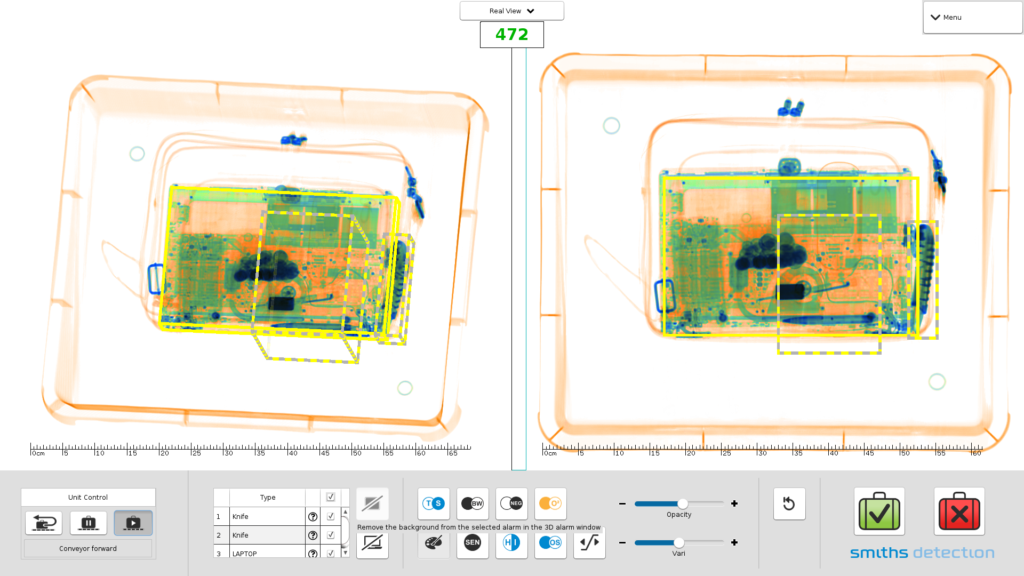
Computed tomography (CT) for cabin baggage sits at the center of this shift because it changes the passenger process as well as the experience. When CT is deployed effectively, it can reduce friction at the point where the journey is most exposed: divestment and repacking.

Smiths Detection’s CTiX platform enables a true ‘leave-in-bag’ experience at scale. Laptops and electronics remain inside baggage, and passengers can keep liquids in their bags in containers up to two litres. That removes one of the slowest, most variable steps at security. Fewer items on the belt mean less tray handling, shorter repacking times and fewer stoppages due to uncertainty and rework.

Operationally, that translates into a more predictable lane process. When most passengers are required to do less, throughput is less dependent on the slowest in the queue. Queues become easier to manage, and fewer passengers are pulled aside for avoidable intervention.

Decision support shifts focus to exceptions

However, equipment capability alone does not deliver an end-to-end operating model. As volumes increase, decision-making under pressure becomes equally important.

This is where AI-enabled decision support becomes central. Smiths Detection’s iCMORE is an AI-enabled tool that automatically flags a range of prohibited items to support faster, more consistent decisions. In practical terms, this shifts attention away from routine image review toward bags that genuinely require intervention. By reducing avoidable secondary checks and lowering cognitive load during peak periods, decision support helps maintain consistency across long shifts and fluctuating passenger numbers.
Rethinking checkpoint operations end to end.

Flow is engineered at the lane

Even with a simplified passenger process and stronger decision support, checkpoint performance ultimately hinges on flow. Tray management is therefore a core element of the end-to-end operating model.

Smiths Detection’s iLane A20 operates within this critical layer, supporting higher throughput and reducing queue build-up by optimizing how passengers and trays move through the lane. When divestment is smoother, tray return is reliable and passenger movement is uninterrupted, time savings compound quickly across the day. Those small gains are the difference between stable operation and a queue that creeps into the terminal.

End-to-end means operational control, not collection

In an airport environment, end-to-end needs to mean a connected operating model, not a set of assets. In practice, it links four elements into a single system: a passenger process that reduces friction, screening capability that supports confident decisions, lane design that maintains flow, and performance management that gives teams visibility and control.

In that context, CTiX, iCMORE and iLane A20 represent the core layers of a connected checkpoint: screening, decision support and operational flow. When those layers work together, airports gain a checkpoint that runs more smoothly under pressure and improves over time.

Connectivity and remote operations

As checkpoints become more connected, digital architecture becomes part of operations. Open architecture recognizes the reality that airports need systems to work together, and that performance improves through orchestration rather than isolated upgrades. Remote screening and centralized review models also help balance workload and reduce congestion at the lane.

A practical example of end-to-end delivery

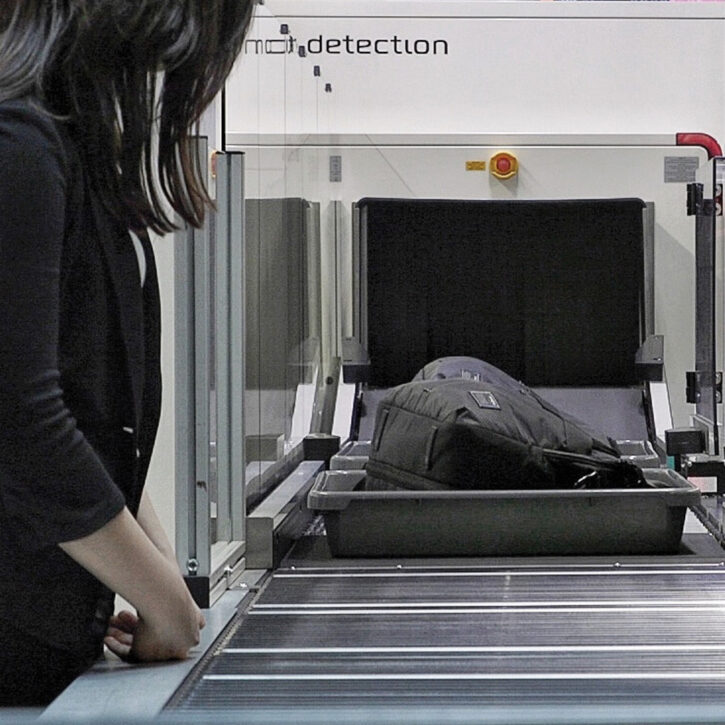
This approach is already moving from concept to execution. At Malta International Airport, rising passenger numbers placed cabin baggage screening under sustained pressure. The response combined deployment of CT for cabin baggage with remote screening architecture, centralizing image review in a dedicated control room to support smoother throughput and a less intrusive passenger experience.

The wider point is the operating logic. When screening capability, decision support, lane flow and performance management are treated as a connected system, airports can build checkpoints that are resilient, measurable and easier to run well.
Rethinking checkpoint operations end to end.

The future checkpoint: connected, resilient, defensible

The broader lesson extends beyond any single site or deployment. Competitive advantage will increasingly depend on how effectively airports optimize checkpoint systems and workflows, with performance that can be measured, improved and defended under regulatory scrutiny. With global passenger volumes forecast to rise to 18.8 billion travelers by 2045[1], pressure on existing security infrastructure will only intensify.

The future checkpoint will be defined by how well the operating model connects passenger process, detection, decision support, lane performance and, where used, remote operations into a resilient end-to-end system.

For airport leaders, the priority is building a resilient checkpoint that runs smoothly during peaks, recovers quickly from disruption and improves over time. That means reducing friction for passengers while sharpening focus on the minority of cases that genuinely require human attention.

In that direction of travel, CTiX enables a materially different journey through true leave-in-bag capability, iCMORE supports exception-focused screening through AI-enabled decision support, and iLane A20 strengthens the flow mechanics that turn capability into throughput. Together, that is what end-to-end looks like in practice: a connected checkpoint operating model designed for performance, resilience and consistent security outcomes.

[1] https://aci.aero/2026/01/28/aci-world-releases-global-airport-traffic-forecasts-as-long-term-demand-growth-continues-to-reshape-aviation/

About the author:

Kevin Riordan is head of airports and checkpoint solutions at Smiths Detection. He works with airports and security stakeholders to improve checkpoint performance through connected screening systems and digital operations.

Share. Twitter LinkedIn Facebook Email
Previous ArticlePacking guidance to be updated at Australian airports in line with new traveler tool
Next Article Aurrigo granted ground handling services license at East Midlands Airport with autonomous technology

Related Posts

A passenger looks at the 'Pack Right. Safe Flight' mobile app on their smartphone.
Security

Packing guidance to be updated at Australian airports in line with new traveler tool

March 4, 20261 Min Read
Airport and governmental organization representatives attend the launch of the Single Entry Point for Air Travel project at Bahrain airport.
Check in

Single Entry Point travel project launched at Bahrain International Airport

February 25, 20261 Min Read
A passenger uses self-service check-in kiosk at Ninoy Aquino airport.
Check in

Ninoy Aquino expands self-service options

February 24, 20261 Min Read
Latest News
Aurrigo granted ground handling services license at East Midlands Airport with autonomous technology.

Aurrigo granted ground handling services license at East Midlands Airport with autonomous technology

March 4, 2026
Rethinking checkpoint operations end to end.

OPINION: Rethinking checkpoint operations end to end

March 4, 2026
A passenger looks at the 'Pack Right. Safe Flight' mobile app on their smartphone.

Packing guidance to be updated at Australian airports in line with new traveler tool

March 4, 2026

Receive breaking stories and features in your inbox each week, for free


Enter your email address:


Our Social Channels
  • Facebook
  • LinkedIn
Getting in Touch
  • Sign-up for Free Weekly E-Newsletter
  • Meet the Editors
  • Contact Us
  • Media Pack
© 2026 UKi Media & Events a division of UKIP Media & Events Ltd
  • Terms and Conditions
  • Privacy Policy
  • Cookie Policy
  • Notice & Takedown Policy

Type above and press Enter to search. Press Esc to cancel.

We use cookies on our website to give you the most relevant experience by remembering your preferences and repeat visits. By clicking “Accept”, you consent to the use of ALL the cookies.
Cookie settingsACCEPT
Manage consent

Privacy Overview

This website uses cookies to improve your experience while you navigate through the website. Out of these, the cookies that are categorized as necessary are stored on your browser as they are essential for the working of basic functionalities of the website. We also use third-party cookies that help us analyze and understand how you use this website. These cookies will be stored in your browser only with your consent. You also have the option to opt-out of these cookies. But opting out of some of these cookies may affect your browsing experience.
Necessary
Always Enabled
Necessary cookies are absolutely essential for the website to function properly. These cookies ensure basic functionalities and security features of the website, anonymously.
CookieDurationDescription
cookielawinfo-checbox-analytics11 monthsThis cookie is set by GDPR Cookie Consent plugin. The cookie is used to store the user consent for the cookies in the category "Analytics".
cookielawinfo-checbox-functional11 monthsThe cookie is set by GDPR cookie consent to record the user consent for the cookies in the category "Functional".
cookielawinfo-checbox-others11 monthsThis cookie is set by GDPR Cookie Consent plugin. The cookie is used to store the user consent for the cookies in the category "Other.
cookielawinfo-checkbox-necessary11 monthsThis cookie is set by GDPR Cookie Consent plugin. The cookies is used to store the user consent for the cookies in the category "Necessary".
cookielawinfo-checkbox-performance11 monthsThis cookie is set by GDPR Cookie Consent plugin. The cookie is used to store the user consent for the cookies in the category "Performance".
viewed_cookie_policy11 monthsThe cookie is set by the GDPR Cookie Consent plugin and is used to store whether or not user has consented to the use of cookies. It does not store any personal data.
Functional
Functional cookies help to perform certain functionalities like sharing the content of the website on social media platforms, collect feedbacks, and other third-party features.
Performance
Performance cookies are used to understand and analyze the key performance indexes of the website which helps in delivering a better user experience for the visitors.
Analytics
Analytical cookies are used to understand how visitors interact with the website. These cookies help provide information on metrics the number of visitors, bounce rate, traffic source, etc.
Advertisement
Advertisement cookies are used to provide visitors with relevant ads and marketing campaigns. These cookies track visitors across websites and collect information to provide customized ads.
Others
Other uncategorized cookies are those that are being analyzed and have not been classified into a category as yet.
SAVE & ACCEPT