
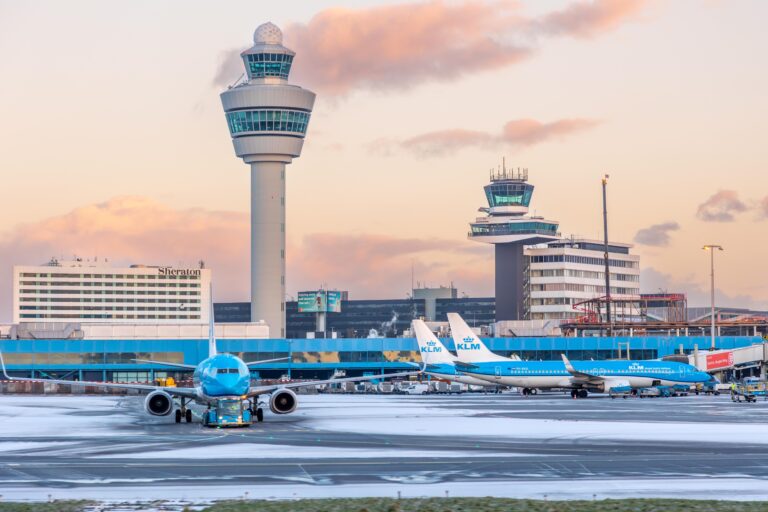
Royal Schiphol Group and KLM Royal Dutch Airlines have announced new measures to improve operations during winter weather, following widespread disruption caused by heavy snowfall in early January.
An independent evaluation conducted by Oliver Wyman found that the impact on passengers and staff was exacerbated by a combination of severe weather, operational challenges and the timing of mitigation measures. The disruption led to significant delays and cancellations, with passengers experiencing extended waiting times before continuing their journeys.
Schiphol and KLM acknowledged the effect of the disruption on passengers, employees and the wider aviation sector.
To improve resilience during snow and freezing conditions, the two organizations are implementing a joint winter readiness plan. This includes enhanced passenger support and communication, as well as increased aircraft de-icing capacity.
According to the evaluation, snowfall began earlier than forecast and was heavier than expected, which significantly increased demand for de-icing and extended aircraft handling times. At the same time, reducing flight volumes proved difficult to execute quickly enough. As a result, operational adjustments and decision-making were delayed, contributing to the scale of the disruption.
The report concluded that extreme weather conditions will continue to cause delays and cancellations in aviation. However, it also identified opportunities to improve response measures.
Schiphol and KLM said they will work together, and where necessary with other airport stakeholders, to implement the report’s recommendations. Additional details are outlined in the organizations’ respective management responses.
In related news, Rohde & Schwarz USA awarded $4.9bn FAA contract to modernize ATC communications